



Liquidation pallets let resellers buy recognizable consumer products in bulk, often below standard wholesale cost. For discount stores, marketplace sellers, and distributors, that makes them a tempting stock source. The lower purchase price, however, comes with more uncertainty than buying new stock from a manufacturer.
A pallet can include sealed products, open-box items, customer returns, and goods that need repair. Two pallets with similar titles can perform very differently once you count missing parts, freight, testing time, and items you can’t sell.
This guide explains how B2B buyers can assess Amazon liquidation pallets Europe offers: which pallet types to consider, how to read a manifest, how to estimate landed cost, and what to check before you pay. If you already buy return stock and want tips on sorting, repairing, and relisting items, see our separate guide on how to buy and resell Amazon customer return pallets. This article focuses on the buying decision itself.
What Are Amazon Liquidation Pallets?
Amazon liquidation pallets are bulk lots of merchandise that came out of Amazon-related retail channels and are sold on through liquidators and wholesale resellers. The stock usually falls into one or more of these groups:
- Customer returns: Items sent back by shoppers. Some are unused, some are opened, and some are faulty or incomplete.
- Overstock: Surplus inventory that was never sold. It’s often new, but packaging can still be worn from storage and handling.
- Shelf pulls: Products removed from sale because of packaging changes, seasonal turnover, or slow sales.
- Mixed merchandise: A combination of the above, sometimes across several product categories.
The word “Amazon” describes where the merchandise is understood to have come from. It doesn’t mean the products are new, tested, or covered by a manufacturer’s warranty. It also doesn’t mean the seller has a partnership with Amazon. Treat each pallet as a commercial lot whose condition needs checking.
Types of Amazon Liquidation Pallets Available to Consider
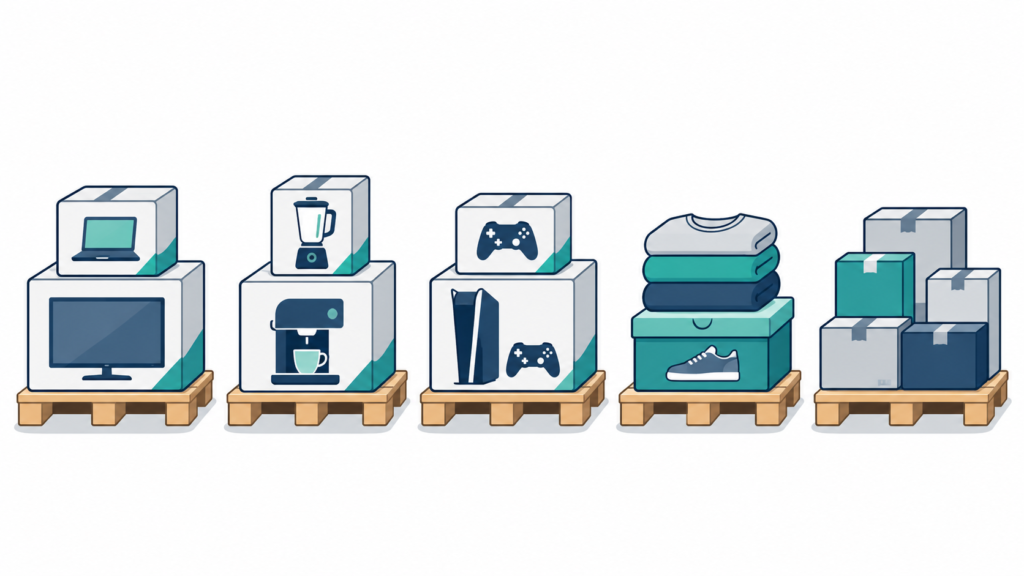
Category choice affects almost everything: your testing workload, compliance checks, freight cost, and how quickly you can sell. Below are the main pallet types B2B buyers compare.
Electronics and Smart TV Pallets
Amazon electronics pallets can have high retail value per item. They also carry the highest functional risk. Screens may be cracked, remotes missing, or units faulty. Large TVs are bulky and fragile, so freight and damage risk rise.
Prosperion’s Amazon liquidation category includes electronics-related listings such as HP Pallets-0636 and iPhone Liquidation Pallets-7665. A Smart TV pallet listing has also been referenced. For phones, you should also ask how activation locks, carrier locks, and device identity checks are handled.
Kitchen Appliance Pallets
Kitchen pallets may include blenders, air fryers, coffee machines, and similar small appliances. They tend to sell well in discount retail and online. Common issues include missing lids, jugs, or blades, plus cosmetic marks and electrical faults.
The Amazon Air Conditioner Pallets-3242 listing belongs in the appliance group too. Air conditioning units are heavy, may contain refrigerant gases, and can face extra handling or resale rules in some markets.
Gaming and PS5 Pallets
Gaming consoles and accessories attract strong buyer interest, but they’re also prone to missing controllers, damaged ports, account locks, and returns that are empty or replaced with other items. Serial number checks and function testing are essential.
Clothing and Footwear Pallets
Apparel and footwear are generally lower risk on function, since there’s nothing to power on. The challenges are sizing gaps, odd pairs, worn items, and seasonal fit. Examples in Prosperion’s category include Amazon Clothes Liquidation Pallets-3225, Amazon Crocs Pallets-3238, and Amazon Female Handbags Pallets-6546. Before buying branded fashion, ask how authenticity has been assessed and whether you can sell those brands on your chosen marketplace.
Mixed and Hybrid Liquidation Pallets
Amazon mixed pallets combine several categories. Listings such as Amazon Hybrid Pallets-8654, Amazon General Pallets-6786, and Amazon High Piece Count Pallets-2758 fall into this group. Mixed lots spread risk across many items, but you need sorting space and several sales channels. High piece count pallets often contain many lower-value items, which means more handling time per euro of revenue.
Specialist lots also appear, such as Amazon Baby Toys Pallets-0856, , and Amazon Food Pallets AMZF-35507 Truckload. Toys need safety and recall checks. Christmas stock is seasonal, so timing matters. Food lots require best-before date checks and compliance with food rules in your country.
You can review current listings in Prosperion’s Amazon liquidation pallets category. Listing titles describe a category of lot, not a guaranteed item list.
How to Choose the Right Pallet for Your Retail Business
The best pallet is the one you can process and sell efficiently. Ask yourself:
- What do your customers already buy? A fashion boutique gains little from a pallet of power banks.
- How experienced is your team? First-time buyers often start with lower-risk categories like apparel or home goods before moving into electronics.
- Can you test the products? Electronics and appliances need staff, equipment, and time for testing. Without that, you’ll be selling items as untested, at a much lower price.
- Where will you sell? Marketplace rules on used, refurbished, or branded goods vary. Retail shops, market stalls, and B2B resale each suit different stock grades.
- How will you handle unsellable items? Plan for parts sales, recycling, or disposal from the start.
Manifested vs. Unmanifested Amazon Pallets
A manifest is a list of items that the seller says are on the pallet. It often includes product titles, quantities, identifiers, and an estimated retail value.
A manifest helps you:
- Estimate potential resale value
- Spot high-risk items, such as faulty-prone electronics
- Check whether the product mix fits your channels
A manifest doesn’t guarantee:
- That every item works or is complete
- That the listed retail value reflects what you can sell it for
- That nothing was added, removed, or swapped during handling
Unmanifested pallets are sold without an item list. They usually cost less, but you’re buying with far less information. For a deeper look at how manifest status affects larger volumes, read our guide to getting started with truckload liquidation.
Whichever you choose, ask for photos of the actual pallet and clarify whether the manifest is lot-specific or a sample of typical contents.
How Much Do Amazon Liquidation Pallets Cost?
This guide doesn’t list prices because they change with each lot. Common pricing factors include:
- Product category and brand mix
- Condition mix (new, open-box, returns, untested)
- Manifested or unmanifested status
- Pallet size and piece count
- Warehouse location
- Order volume, from single pallets to full truckloads
How to Calculate Landed Cost
Landed cost is the total cost to get the goods into your warehouse and ready to sell:
Landed cost = pallet price + freight + insurance + duties and taxes (where applicable) + customs or brokerage fees + handling + testing labor + disposal costs
Then divide by the number of items you can actually sell, not the number on the manifest.
Hypothetical Example (For Illustration Only)
The figures below are invented to show the method. They don’t reflect real Prosperion prices or typical results.
|
Cost item |
Hypothetical amount |
|---|---|
|
Pallet price |
€1,000 |
|
Freight within Europe |
€250 |
|
Insurance |
€20 |
|
Unloading and handling |
€50 |
|
Testing and sorting labor |
€150 |
|
Disposal of unsellable items |
€40 |
|
Total landed cost |
€1,510 |
Suppose the manifest lists 100 items, but after testing only 75 can be sold. Your real cost per sellable item is about €20.13, not €15.10. That difference is why the sellable rate matters more than the headline price. Tax treatment depends on your location and VAT status.
How to Evaluate Product Quality and Pallet Condition
Understand Condition Categories
Ask the seller to define each grade they use. Common terms include:
- New: Unused, often in original packaging
- Open-box: Packaging opened, product may be unused
- Customer return: Returned by a shopper, condition varies
- Untested: Not checked for function
Grading terms aren’t standardized across the industry. Get the seller’s definitions in writing.
Check for Missing Accessories
Chargers, remotes, cables, lids, and manuals often go missing in returns. Factor replacement costs into your margin.
Plan Functional Testing
Test electronics and appliances before you list them. Use proper safety procedures, and never sell untested electrical items as working.
Assess Damage and Grading
Separate items into resale grades, such as sellable as new, sellable with cosmetic marks, spare parts, and recycling. Track the results by pallet type so your next purchase is better informed.
Review Product Safety and Recalls
Check toys, baby products, electrical goods, and batteries against recall databases in your market. Recalled products shouldn’t be resold. Electrical goods for Europe and the UK should carry the correct conformity marks and suit local voltage and plug types. Products made for the US market may need extra checks.
Ask About Documentation and Inspection
Request an invoice, a packing list, and recent pallet photos. For larger orders, ask whether you can view the stock at the warehouse or send an independent inspector.
Shipping Amazon Pallets Across Europe, the UK and International Markets
Freight can change your margin a lot, so plan it early.
- Within the EU: Pallets usually move by road. B2B sales between VAT-registered businesses in different EU countries may follow intra-community VAT rules.
- To the UK: Shipments from the EU need customs declarations and may be subject to import VAT and duties.
- To the US, Asia, and the Middle East: Expect sea or air freight, import duties, and possible restrictions on used or refurbished goods, electronics, or food.
- Incoterms: Agree on terms such as EXW, FCA, or DAP so it’s clear who pays for and is responsible for each stage.
- Batteries: Lithium batteries in phones, laptops, and power tools may require dangerous goods handling.
- Origin warehouse: Prosperion’s contact page lists warehouse locations in Poland and the United States. Shipping from the nearest location may reduce freight.
A local customs broker can confirm duty rates, documents, and any product restrictions for your destination.
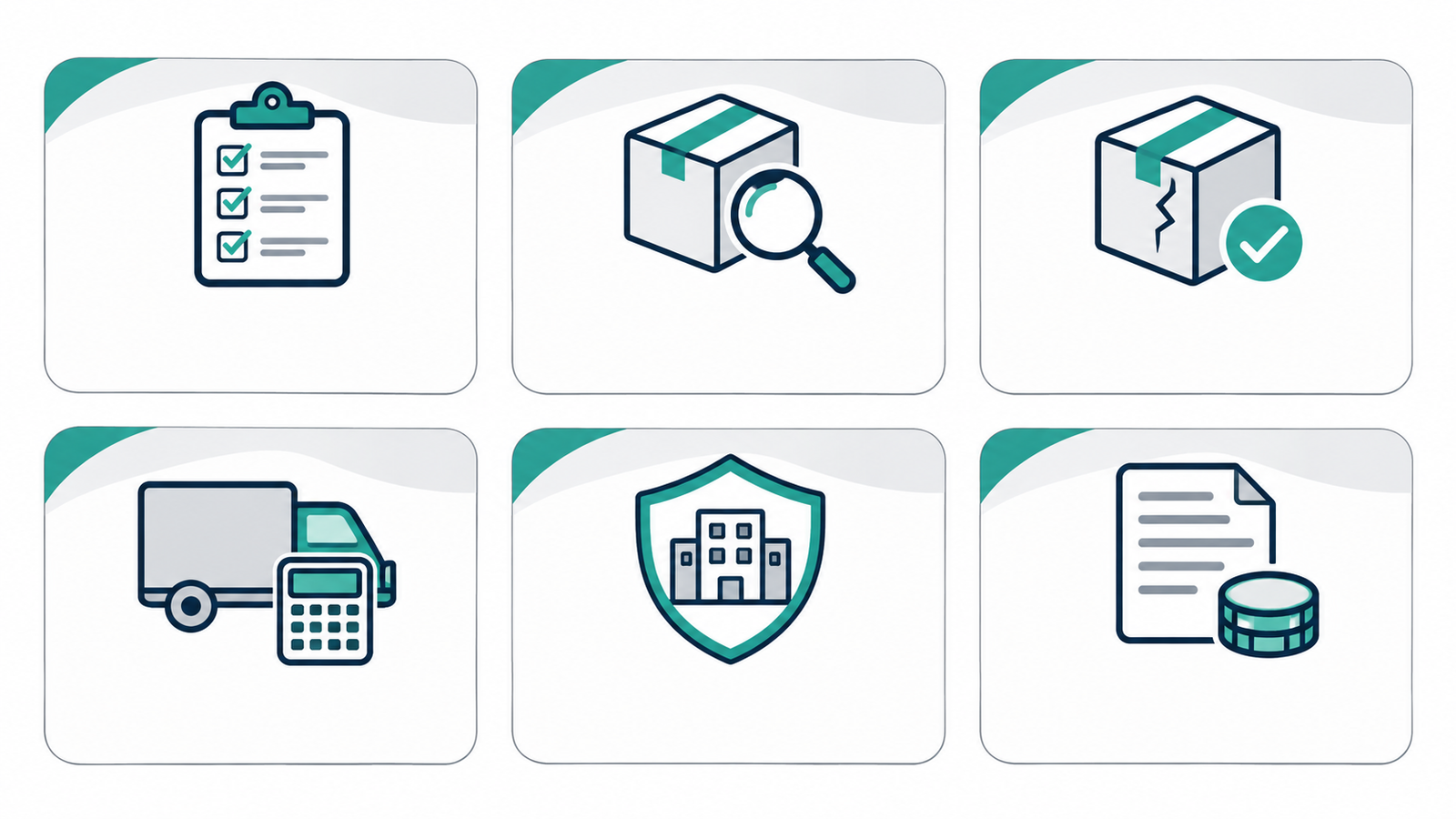
B2B Buyer’s Checklist Before Placing an Order
- Define your target categories and sales channels.
- Shortlist listings that match your testing capacity.
- Ask whether the pallet is manifested and if the manifest is lot-specific.
- Request recent photos of the actual pallet.
- Get written definitions of the condition grades used.
- Confirm the MOQ, pallet dimensions, and approximate weight.
- Check restricted items, such as batteries, food, or refrigerant-containing appliances.
- Confirm the Incoterm, pickup or delivery point, and lead time.
- Calculate landed cost based on a conservative sellable rate.
- Check safety, recall, and conformity requirements for your market.
- Verify the supplier’s company registration and contact details.
- Get a written quotation with payment terms and the returns or claims policy.
- Confirm bank details through a trusted, known contact before paying.
Common Mistakes When Buying Liquidation Pallets
- Expecting retail-level profits. Manifest retail value is not resale value. Use realistic, discounted prices in your plans.
- Ignoring condition grading. “Mixed condition” can mean very different things. Clarify it before you buy.
- Forgetting freight and handling. A cheap pallet with expensive delivery may cost more than a better-priced lot nearby.
- Buying categories you can’t process. Untested electronics without testing capacity tie up cash and space.
- Falling for fake sellers. Fraudulent offers often use too-good-to-be-true prices, pressure tactics, and unverified bank details.
If you’re still deciding whether liquidation stock fits your store, our article on why online stores buy liquidation merchandise covers the broader picture.
How to Explore Amazon Liquidation Pallets on Prosperion LTD
Prosperion LTD is a B2B wholesale and liquidation supplier based in Warsaw, Poland. Prosperion isn’t owned, sponsored, endorsed, or authorized by Amazon. In listing titles, “Amazon” describes the advertised liquidation product category, not a direct brand partnership.
To explore available options:
- Browse the Amazon liquidation category and open listings that match your channels.
- Compare listing details, photos, and any options shown.
- Add relevant listings to the enquiry cart using “Add For Enquiry.”
- Include your destination country, preferred Incoterm, volume, and questions about condition and manifests.
Stock labels on listings should be confirmed during the enquiry. An enquiry is a request for current availability and commercial terms. It isn’t an order confirmation. The site states that MOQs apply, so confirm the minimum for each lot.
Frequently Asked Questions
Is Prosperion an official Amazon partner?
No. Prosperion isn’t owned, sponsored, or authorized by Amazon. “Amazon” in listing titles describes the liquidation product category.
Are Amazon liquidation pallets new?
Not necessarily. Pallets can contain new, open-box, returned, damaged, or untested items. Confirm the condition mix in writing before buying.
Does a manifest guarantee what I’ll receive?
No. A manifest is a helpful guide, but it doesn’t guarantee function, completeness, or resale value. Ask whether it’s specific to the lot.
Which pallet type is best for first-time buyers?
Many beginners start with categories that need less testing, such as clothing or general merchandise, before moving into electronics.
Can I buy Amazon pallets in Europe and ship them to the UK or outside Europe?
Often, yes, but customs declarations, import VAT, duties, and product restrictions may apply. Check with a customs broker before ordering.
How do I estimate profit on a pallet?
Calculate full landed cost, estimate a conservative sellable rate, and use realistic resale prices. Never rely on the manifest retail value alone.
Is there a minimum order quantity?
Prosperion indicates that MOQs apply. The exact minimum depends on the listing, so confirm it in your enquiry.
Compare Listings and Request a Written Quotation
Amazon liquidation pallets can be a practical stock source when you choose the right category, check condition details, and calculate your true landed cost. Start by comparing current lots in the Amazon liquidation category. Then send an enquiry with your destination, volume, and questions about manifests and grading.
For anything not covered in the listing, contact the Prosperion team and request a written quotation before you commit.
