


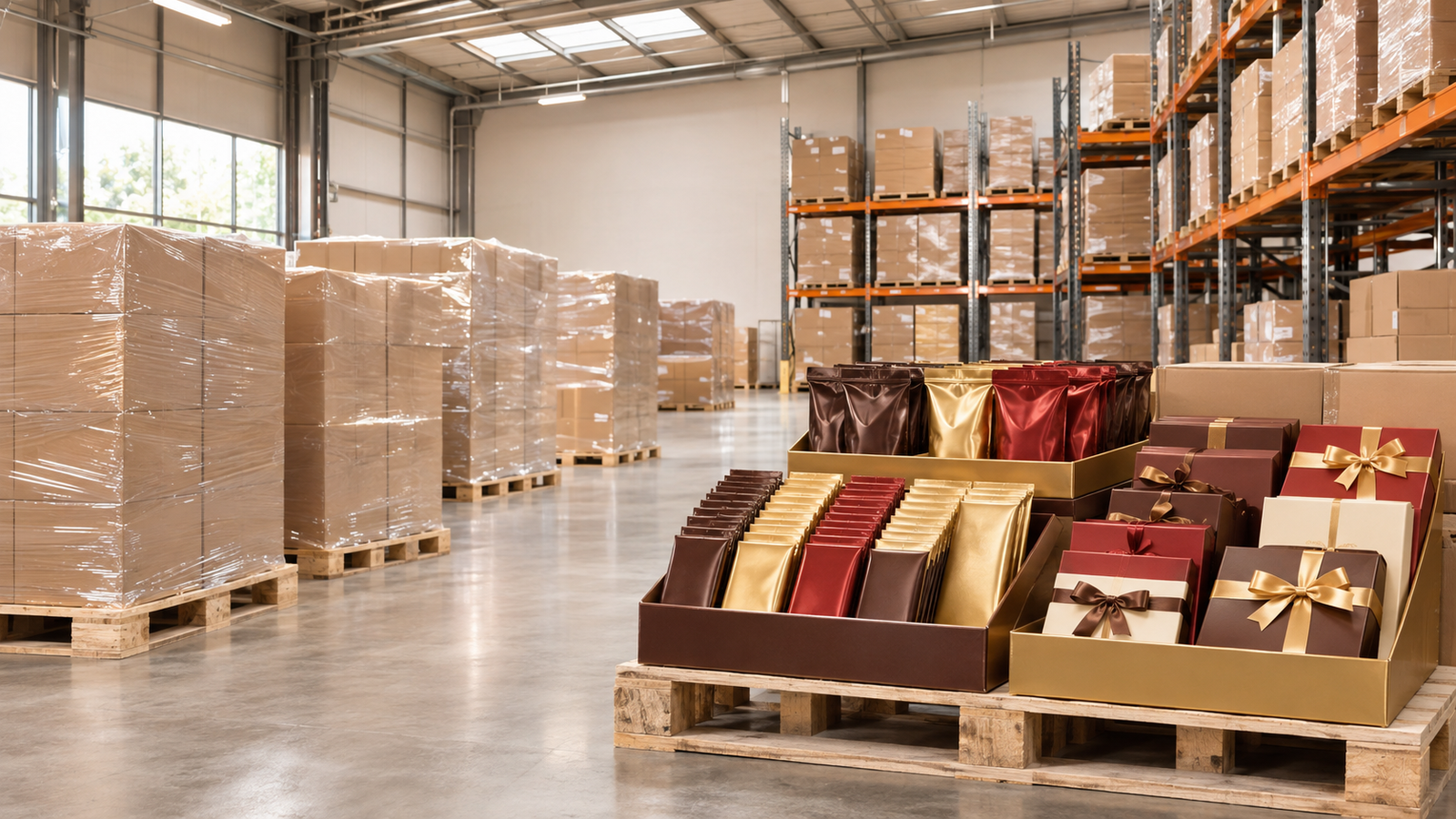
Branded chocolate sits near the checkout of almost every supermarket, convenience store, and petrol station. It sells all year, peaks around holidays, and gives shoppers an easy add-on purchase. That makes it a natural category for retailers, importers, and distributors.
If you plan to buy chocolate wholesale in Europe, the unit price is only part of the decision. Chocolate is sensitive to heat, carries strict allergen labeling rules, and has a shelf life that directly affects how fast you must sell. A low quote can quickly turn into a loss if stock arrives melted, short-dated, or labeled for the wrong market.
This guide walks B2B buyers through the full process. It covers choosing products, checking documents, storing and shipping chocolate safely, and comparing suppliers before you send an enquiry.
Why Buy Chocolate Wholesale in Europe?
Europe is home to many of the world’s best-known confectionery brands and production sites. For buyers, that creates practical advantages:
- Wide product range. You can source single bars, sharing bags, gift boxes, seasonal lines, and imported specialty products from one region.
- Mixed-order flexibility. Some suppliers offer mixed pallets, which let you test several products without committing to full pallets of each.
- Logistics options. Road freight within Europe and established export routes to the UK, Middle East, Asia, and North America give you several delivery choices.
- Easier comparison. Working with chocolate wholesale suppliers in Europe lets you compare specifications, shelf life, and terms across similar products.
Buying wholesale also supports better planning. When you know case sizes, pallet configurations, and lead times in advance, you can prepare for seasonal peaks such as Christmas, Easter, Valentine’s Day, and Ramadan.
Popular Types of Chocolate for Wholesale Buyers
Product choice should follow your customers, not trends alone. Here are the main groups B2B buyers ask about, with examples from Prosperion’s chocolate listings.
Listings show the types of products Prosperion offers. Current stock, pack formats, and destination eligibility must be confirmed in your enquiry. [VERIFY BEFORE PUBLISHING: Confirm all listed products are still live.]
Kinder and Ferrero Chocolate Wholesale
Kinder chocolate wholesale products suit supermarkets, convenience stores, and family-focused retailers. Prosperion’s listings include Ferrero Kinder Bueno 43g, Kinder Bueno Mini 108g, Kinder Country 23.5g, Kinder Joy, Kinder Surprise Egg, and Kinder Schoko Bons 125g.
The wider Ferrero range includes Duplo, Ferrero Collection 172g and 269g gift boxes, and Nutella B-Ready.
Each format serves a different shelf:
- Single bars for impulse sales near tills
- Sharing bags for grocery aisles
- Gift boxes for seasonal and premium displays
Kinder Surprise and Kinder Joy contain small toys. Toy safety and food rules may apply, and some markets restrict confectionery with embedded non-food items.
M&M’s Chocolate Wholesale
The listed M&M’s Peanut Chocolate Candies 62oz is a large-format bag. It may suit foodservice, vending, or bulk-candy displays more than standard shelves.
The ounce-based sizing suggests a US-market product. Check whether the labeling meets your destination’s language and metric unit requirements. Peanuts are a major allergen, so clear allergen labeling is essential. [VERIFY BEFORE PUBLISHING: Confirm the production market and label language.]
REESE’S Chocolate Products
REESE’S White Peanut Butter Cups appeal to retailers that stock imported American confectionery. These products often attract a loyal niche audience.
Before importing, confirm that ingredients, additives, and labeling comply with your destination’s food rules. Requirements can differ between the US and Europe.
MrBeast Feastables Chocolate Wholesale
MrBeast Feastables is a creator-led brand with strong appeal among younger shoppers. Demand for social media-driven products can rise quickly, but it can also shift fast.
Order volumes that match realistic sell-through. Confirm which market version is offered and whether labels suit your country.
Dubai Fix Chocolate and Mixed Chocolate Products
Dubai-style chocolate, typically filled with pistachio cream, has become a popular specialty line. Prosperion lists a Dubai Fix Chocolate Bar 200g. Because the trend has inspired many imitations, ask about brand origin, producer details, and authenticity. [VERIFY BEFORE PUBLISHING: Confirm product origin and producer.]
Fillings often contain nuts and other allergens, so read the label carefully.
Other listings include Swiss Cailler chocolate and a chocolate cake product. Bakery items usually have a different shelf life and storage profile than solid chocolate, so plan them separately. Mixed assortments can help wholesale chocolate for retailers cover everyday, premium, and seasonal demand.
How to Choose the Right Wholesale Chocolate Products
Start with your customers and sales channel:
- Customer demand. Which brands and flavors do your shoppers already buy?
- Package size. Convenience stores favor single bars. Supermarkets need a mix of bars, bags, and boxes.
- Case quantities. Confirm units per case and cases per pallet so you can plan shelf replenishment.
- Shelf life. Faster-selling lines can tolerate shorter dates. Slow sellers need longer remaining shelf life.
- Positioning. Premium gift boxes need different displays and pricing than budget multipacks.
- Retail requirements. Supermarkets may require scannable barcodes, minimum shelf life on delivery, and local-language labels.
A focused range that sells through reliably usually beats a wide range that ties up cash.
What to Check Before Buying Chocolate in Bulk
Use this list when reviewing any offer from bulk chocolate suppliers:
- Product authenticity. Request recent photos of the actual stock, including cartons, batch codes, and labels.
- Ingredients and allergen declarations. Milk, nuts, soy, and gluten are common in chocolate. Allergens must be declared according to destination rules.
- Best-before dates. Ask for the date range and the minimum remaining shelf life guaranteed on arrival.
- Packaging condition. Check for crushed cartons, torn wrappers, or signs of heat damage.
- Country of origin. Origin can affect duties, documents, and labeling.
- Product labeling. Confirm the label language and whether stickering is permitted.
- Batch traceability. Every carton should carry a lot or batch code that links to production records.
- Supplier documentation. Request a proforma invoice, packing list, and company registration details.
- Minimum order quantities. Prosperion’s site states that MOQs apply. Confirm the exact minimum for each product.
- Returns and claims. Agree in writing how damage, shortages, or quality issues are handled. Prosperion’s site states that sales are final for some product types, so clarify claim terms before paying. [VERIFY BEFORE PUBLISHING: Confirm claims policy wording for food products.]
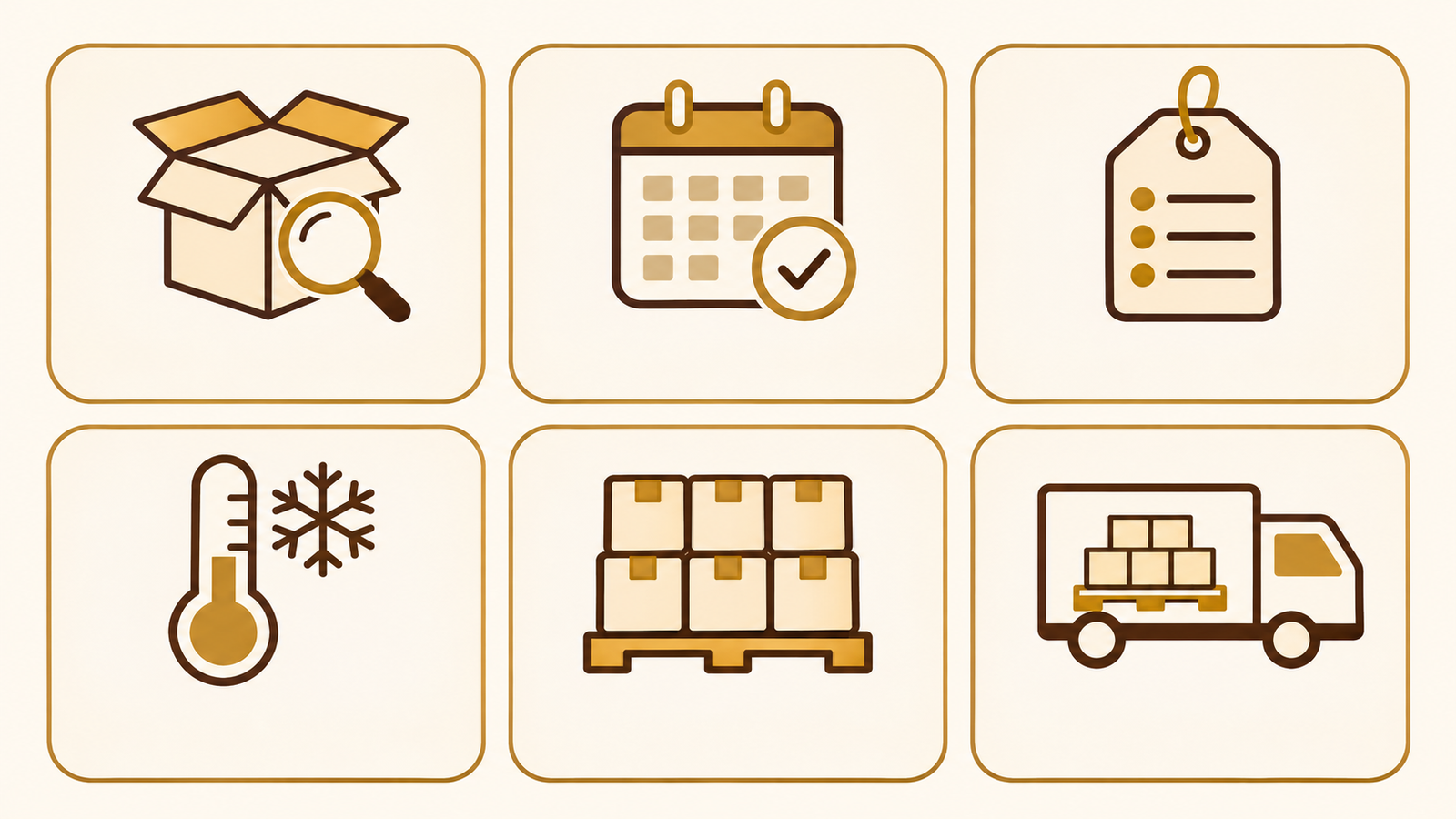
Chocolate Storage, Temperature Control and Shipping
Chocolate is one of the most temperature-sensitive products in dry grocery. Too much heat softens or melts it. Temperature swings and humidity can cause bloom, a pale or white surface coating that harms appearance even when the product is still safe.
There’s no single universal temperature for every chocolate product. Suitable conditions depend on the manufacturer’s specifications, the product type, and the destination climate. Follow the storage instructions on the packaging and in product specifications.
Good practice includes:
- Dry, cool, odor-free storage away from direct sunlight and strong smells
- FEFO rotation (first expired, first out) with batch codes visible
- Temperature-controlled transport for long routes, hot seasons, or warm destinations
- Insulation or thermal covers for shorter routes where reefer transport isn’t used
- Fast unloading and no waiting on hot docks
- Temperature loggers for high-value or long-distance shipments
Summer shipments to southern Europe, the Middle East, and parts of Asia carry the highest melt risk. Discuss transport options and their cost before you confirm an order. Inspect pallets on arrival and photograph any damage before removing the stretch wrap.
Importing Wholesale Chocolate to Europe, UK, USA, Asia and Middle East
Food import rules vary by country. No chocolate product is automatically approved for every market.
Common areas to check:
- Customs documents. Commercial invoice, packing list, transport document, and often a certificate of origin
- Ingredient labeling. Many countries require labels in the local language, with specific formats
- Allergens. Declaration rules and highlighted allergen lists differ by market
- Import clearance. Some countries require registration of the importer, the product, or both
- Taxes and duties. Import duties, VAT or GST, and in some markets sugar-related taxes
Region-specific points to review:
- EU: Food information rules set mandatory label content and allergen emphasis.
- UK: Imports from the EU require customs declarations, and labels may need UK importer details.
- USA: Food imports are regulated by the FDA, and importers may need to meet prior notice and supplier verification requirements.
- Asia: Label language, registration, and import licensing rules vary widely by country.
- Middle East: Arabic labeling and Gulf standards may apply.
For Middle East and other halal-sensitive markets, verify halal certification for each specific product and destination. Never assume a branded chocolate is halal certified. Ingredients and certification can differ by factory and production market.
A customs broker or food import specialist in your destination country can confirm current requirements before you order.
How to Compare Wholesale Chocolate Suppliers
Two quotes with similar prices can lead to very different final costs. Compare offers on the same terms:
|
What to compare |
Why it matters |
|---|---|
|
Product details and pack size |
Ensures you compare the same item |
|
Price per unit, case, and pallet |
Shows true base cost |
|
Case and pallet quantity |
Affects freight cost per unit |
|
Remaining shelf life |
Affects sell-through time and waste |
|
Label language and market |
Determines whether you can sell legally |
|
Incoterm and shipping terms |
Shows who pays freight, insurance, and risk |
|
Temperature control |
Affects product condition on arrival |
|
Compliance documents |
Affects customs clearance |
|
Payment terms |
Affects cash flow and risk |
Choose the offer with the clearest terms and lowest total risk, not just the lowest headline price.
Wholesale Chocolate Buying Checklist for Retailers and Importers
- Destination market and labeling requirements confirmed
- Product list, flavors, and pack sizes agreed
- Units per case and cases per pallet documented
- Minimum remaining shelf life on arrival agreed in writing
- Ingredient and allergen information reviewed
- Halal or other certification verified where required
- Recent photos with batch codes received
- Supplier company registration verified
- Incoterm, pickup point, and lead time confirmed
- Temperature-controlled transport discussed and costed
- Landed cost per unit calculated
- Import duties, taxes, and documents checked with a customs broker
- MOQ, payment terms, and claims process confirmed in writing
- Bank details verified through a trusted contact before payment
Common Mistakes When Buying Chocolate Wholesale
- Ordering without checking remaining shelf life. Short-dated stock may be refused by retailers or need heavy discounting.
- Ignoring transport temperatures. A single hot transit day can damage a full load.
- Comparing prices without shipping costs. A cheap product far away may cost more than a better-priced option closer to you.
- Assuming all brands can be imported into every market. Ingredients, labels, and product formats may not meet local rules.
- Failing to verify supplier terms. Vague payment, claims, or delivery terms create disputes later.
- Ignoring local labeling requirements. Incorrect labels can delay clearance or block retail sales.
How to Explore Wholesale Chocolate Products at Prosperion LTD
Prosperion LTD is a B2B wholesale supplier based in Warsaw, Poland. Prosperion doesn’t claim to be an authorized distributor of any chocolate brand. Brand names are used to identify listed products only.
To explore options:
- Browse the Prosperion chocolate wholesale category to review current listings.
- Open product pages to compare available details and photos.
- Add relevant products to the enquiry cart using “Add For Enquiry.”
- Include your destination country, quantities, preferred Incoterm, and any certification or labeling needs.
You can also explore related confectionery, snacks, and grocery lines in the full f. An enquiry is a request for current availability and commercial terms. It isn’t a confirmation of stock, price, or shipment.
Frequently Asked Questions
How can businesses buy chocolate wholesale in Europe?
Choose products that fit your market, confirm specifications and shelf life, verify the supplier, and request a written quotation with shipping terms and documents included.
Can retailers order mixed branded chocolates in bulk?
Some suppliers offer mixed cases or mixed pallets. Availability depends on the products and supplier, so ask about mixed-order options in your enquiry.
What should buyers check before importing chocolate?
Check label language, allergen declarations, ingredient compliance, shelf life, origin, required documents, duties, and any certification your market requires.
How should chocolate be transported internationally?
Use transport that protects against heat and temperature swings. Long routes, summer shipments, and warm destinations often need temperature-controlled transport.
What affects wholesale chocolate prices?
Brand, pack format, order volume, shelf life, production market, Incoterm, transport method, and seasonal demand all affect price.
How important are best-before dates?
Very important. Many retailers require a minimum remaining shelf life on delivery. Agree on this in writing before you pay.
Can chocolates be shipped to the Middle East?
Often, yes, but labeling, Gulf standards, heat-safe transport, and halal certification must be checked for each product and destination.
What documents should importers request?
Common documents include a commercial invoice, packing list, transport document, and certificate of origin. Some markets also require health, halal, or product registration documents.
Request a Wholesale Chocolate Quote
Successful chocolate sourcing starts with the right products, enough shelf life, compliant labels, and temperature-safe logistics. When you compare suppliers on full landed cost and clear terms, you reduce risk and protect your margin.
Explore Prosperion LTD’s chocolate wholesale category and submit an enquiry with your preferred products, required quantity, and destination country. For questions not covered in the listings, contact the Prosperion team or visit the Prosperion LTD homepage to learn more about our B2B wholesale supply. We’ll reply with the current availability and commercial details you need to decide with confidence.
