

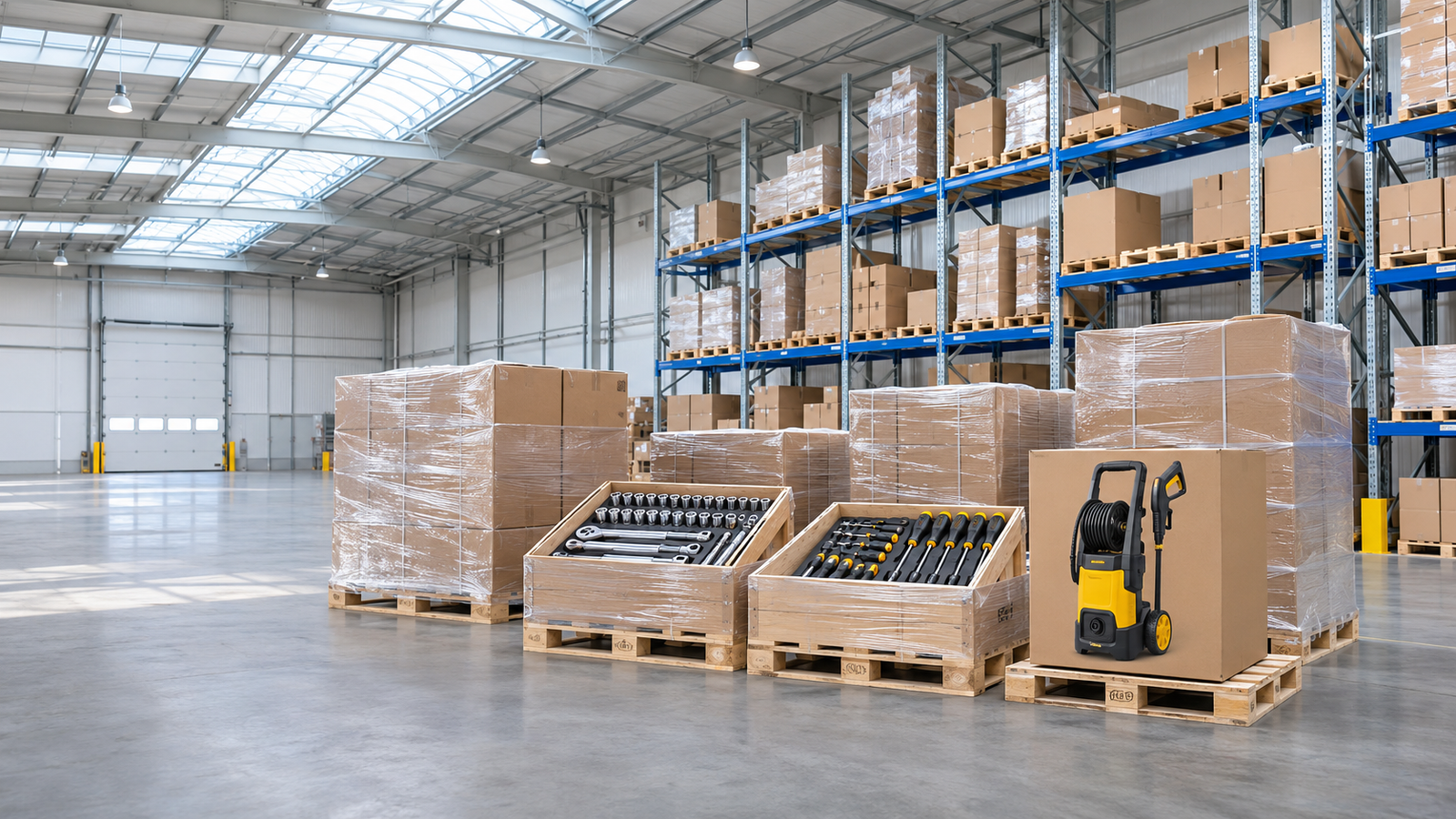
Tools hold their value better than many consumer goods. A drill, a socket set, or a pressure washer still does the same job whether it came from a shop shelf or a liquidation lot. That’s why hardware stores, market traders, and online resellers keep an eye on liquidation tools stock.
The catch is that tools are also some of the riskiest liquidation items to buy blind. Power tools can be faulty, batteries can be missing or unsafe, and products made for one market may not be legal to sell in another.
This guide shows you how to evaluate tools pallets in Europe before you commit. You’ll learn what these pallets usually contain, how condition grades work, what to test, which safety rules matter, and how to calculate a realistic landed cost. If you want advice on sorting and relisting general return stock, see our separate guide on buying and reselling Amazon customer return pallets. This article focuses only on tools.
What Tools Liquidation Pallets Usually Contain
Contents vary from lot to lot, but wholesale tools pallets often include a mix of:
- Hand tools: Screwdriver sets, spanners, hammers, pliers, and socket sets
- Corded power tools: Drills, angle grinders, jigsaws, sanders, and heat guns
- Cordless power tools: Drills, impact drivers, and multi-tools, with or without batteries and chargers
- Garden and outdoor equipment: Trimmers, leaf blowers, and pressure washers
- Hardware and accessories: Drill bits, blades, fixings, tool storage, and workwear
- Workshop equipment: Workbenches, compressors, and small machines
Some pallets focus on one category. Others are mixed hardware pallets in Europe with dozens of product types. Mixed lots spread your risk but need more sorting time.
Condition Grades: What They Really Mean
Grading terms aren’t standardized across the liquidation industry. Always get the seller’s definitions in writing. Here’s how common terms are generally used:
|
Condition |
What it usually means |
Main risk |
|---|---|---|
|
New / overstock |
Surplus stock, unused, often in original packaging |
Worn or damaged boxes |
|
Shelf pulls |
Removed from retail display or range changes |
Minor cosmetic wear, missing packaging |
|
Customer returns |
Sent back by buyers for any reason |
Faults, missing parts, signs of use |
|
Mixed |
A combination of the above |
Unclear ratio of good to faulty stock |
|
Untested |
Not checked for function |
Anything from working to scrap |
For power tool liquidation pallets, the condition mix matters more than for hand tools. A hammer rarely fails. A cordless drill might have a dead motor, a faulty switch, or no battery at all.
Manifested vs. Unmanifested Tools Pallets
A manifest is the seller’s list of items on a pallet. It may include product names, model numbers, quantities, and estimated retail values.
A manifest helps you check whether the product mix suits your customers. It doesn’t guarantee that items work, are complete, or will sell at the listed retail value.
Unmanifested pallets come without an item list. They usually cost less, but you’re buying with very little information. That’s a bigger gamble with tools, where a few faulty high-value items can wipe out your margin. For more on how manifest status affects larger orders, read our guide to getting started with truckload liquidation.
How to Inspect and Test Tools Liquidation Pallets
Inspection protects your margin and your reputation. Plan it before your pallet arrives.
Visual Inspection
Check every item for:
- Cracked housings, bent guards, or damaged cables
- Burn marks, melted plastic, or a burnt smell
- Rust on blades, chucks, or hand tools
- Signs of heavy use, such as worn brushes or caked dust
Accessories and Completeness
Missing parts are common in returns. Look for chargers, batteries, side handles, guards, blades, keys, cases, and manuals. Missing safety guards are especially important. A grinder without its guard shouldn’t be sold as complete.
Functional Testing
Test corded tools with a proper safety setup, ideally on a circuit with residual current protection. Charge and test cordless tools with compatible chargers. For resale as “tested working” in a professional setting, many resellers use portable appliance testing (PAT) or similar electrical safety checks.
Sort tested items into clear groups: sell as new, sell as used, sell for parts, and recycle.
Product Safety and Electrical Compliance
Selling tools that aren’t safe or compliant can lead to recalls, fines, and liability. Before reselling, check:
- CE marking for power tools sold in the EU. Relevant rules include machinery, low voltage, and EMC requirements.
- UKCA or CE marking for Great Britain, depending on current UK rules.
- Voltage and plugs. US-market tools often run on 120 V and won’t suit 230 V European mains without proper equipment. UK and continental European plugs also differ.
- Recalls. Check models against the EU Safety Gate database or national recall lists before resale.
- General product safety duties. EU sellers of consumer products have obligations under the General Product Safety Regulation.
- WEEE obligations. Selling electrical equipment may trigger producer or distributor responsibilities in some countries.
When in doubt, ask a product compliance specialist in your market.
Battery and Transport Considerations
Cordless tools mean lithium-ion batteries, and those bring extra rules.
- Dangerous goods classification. Lithium batteries shipped alone or with equipment may fall under dangerous goods rules for road, sea, and air transport.
- Damaged batteries. Swollen, cracked, or leaking batteries are a fire risk and may need special handling or disposal.
- Battery regulations. The EU Batteries Regulation introduces obligations on labeling, collection, and recycling.
- Weight and stacking. Compressors, pressure washers, and workbenches are heavy. Confirm pallet weight, dimensions, and whether pallets can be stacked.
Tell your freight forwarder exactly what’s on the pallet. Undeclared batteries can cause refused shipments.
Calculating Landed Cost and Realistic Resale Margins
The pallet price is only the starting point. Your landed cost includes:
Pallet price + freight + insurance + duties and taxes (where applicable) + handling + testing labor + replacement parts + disposal and recycling
Then divide that total by the number of items you can actually sell.
Hypothetical Example (For Illustration Only)
These figures are invented to show the method. They don’t reflect real Prosperion prices or typical results.
|
Cost item |
Hypothetical amount |
|---|---|
|
Pallet price |
€800 |
|
Freight |
€200 |
|
Insurance and handling |
€60 |
|
Testing labor |
€120 |
|
Replacement chargers and parts |
€50 |
|
Battery disposal and recycling |
€30 |
|
Total landed cost |
€1,260 |
If the manifest lists 60 items but only 45 are sellable, your real cost is €28 per item, not €21. Base your margins on realistic used or open-box resale prices, never the manifest retail value.
Questions to Ask Before Buying
Ask the supplier these questions before you confirm a tools lot:
- Is the manifest specific to this pallet or a sample of typical contents?
- How are condition grades defined?
- Are batteries and chargers included, and in what condition?
- Which market were the tools made for (voltage and plug type)?
- Can I view the pallet at the warehouse or send an inspector?
- What are the pallet dimensions, weight, and pickup location?
- Which Incoterm applies, and what documents come with the shipment?
- What is the minimum order quantity for this lot?
Common Reseller Mistakes
- Trusting manifest retail values. Used and returned tools sell well below retail.
- Skipping battery checks. One damaged battery can create a safety and transport problem.
- Ignoring voltage. US-market tools may be hard to sell legally or practically in Europe.
- Underestimating testing time. Power tools need hands-on checks, which costs labor.
- Buying categories you can’t sell. Workshop machinery needs different buyers than hand tools.
- Paying unverified sellers. Always confirm company details and bank information through trusted channels.
If you’re still deciding whether liquidation stock suits your business, our article on why online stores buy liquidation merchandise covers the wider picture.
Practical Tools Pallet Buying Checklist
- Target tool categories and sales channels defined
- Condition grade definitions received in writing
- Manifest status and lot-specific contents confirmed
- Recent photos of the actual pallet received
- Battery, charger, and accessory details confirmed
- Voltage, plug type, and CE/UKCA marking checked
- Recall checks planned for key models
- Dangerous goods requirements discussed with your forwarder
- Pallet weight, dimensions, and Incoterm agreed
- Landed cost calculated with a conservative sellable rate
- Supplier registration verified
- Written quotation, MOQ, and payment terms received
- Bank details confirmed through a trusted contact
Frequently Asked Questions
What’s usually in a tools liquidation pallet?
Lots can include hand tools, corded and cordless power tools, garden equipment, accessories, and hardware. Contents vary, so check the manifest and photos for each lot.
Are tools pallets new or used?
They can be either. Pallets may contain new overstock, shelf pulls, customer returns, or untested items. Confirm the condition mix in writing.
Do I need to test power tools before reselling them?
Yes. Functional and electrical safety testing helps you grade items accurately and avoid selling unsafe products.
Can I sell US-market tools in Europe?
It’s often difficult. Voltage, plug type, and conformity marking may not meet European requirements. Check before buying.
Are cordless tools harder to ship?
They can be. Lithium batteries may be subject to dangerous goods transport rules. Tell your forwarder exactly what’s included.
Is there a minimum order quantity?
MOQs depend on the listing and supplier. Confirm the minimum during your enquiry.
Explore Liquidation Stock and Send an Enquiry
Tools pallets can be solid liquidation stock for resellers when you buy the right category, test carefully, and calculate your true landed cost. Start by defining what your customers buy and what your team can test.
Then browse current Europe liquidation pallets and wholesale categories in the Prosperion wholesale shop. Send an enquiry with your destination country, preferred categories, volume, and questions about condition and manifests. An enquiry is a request for current availability and commercial terms, not a confirmation of stock. Our team will reply with the details you need to make an informed decision.